
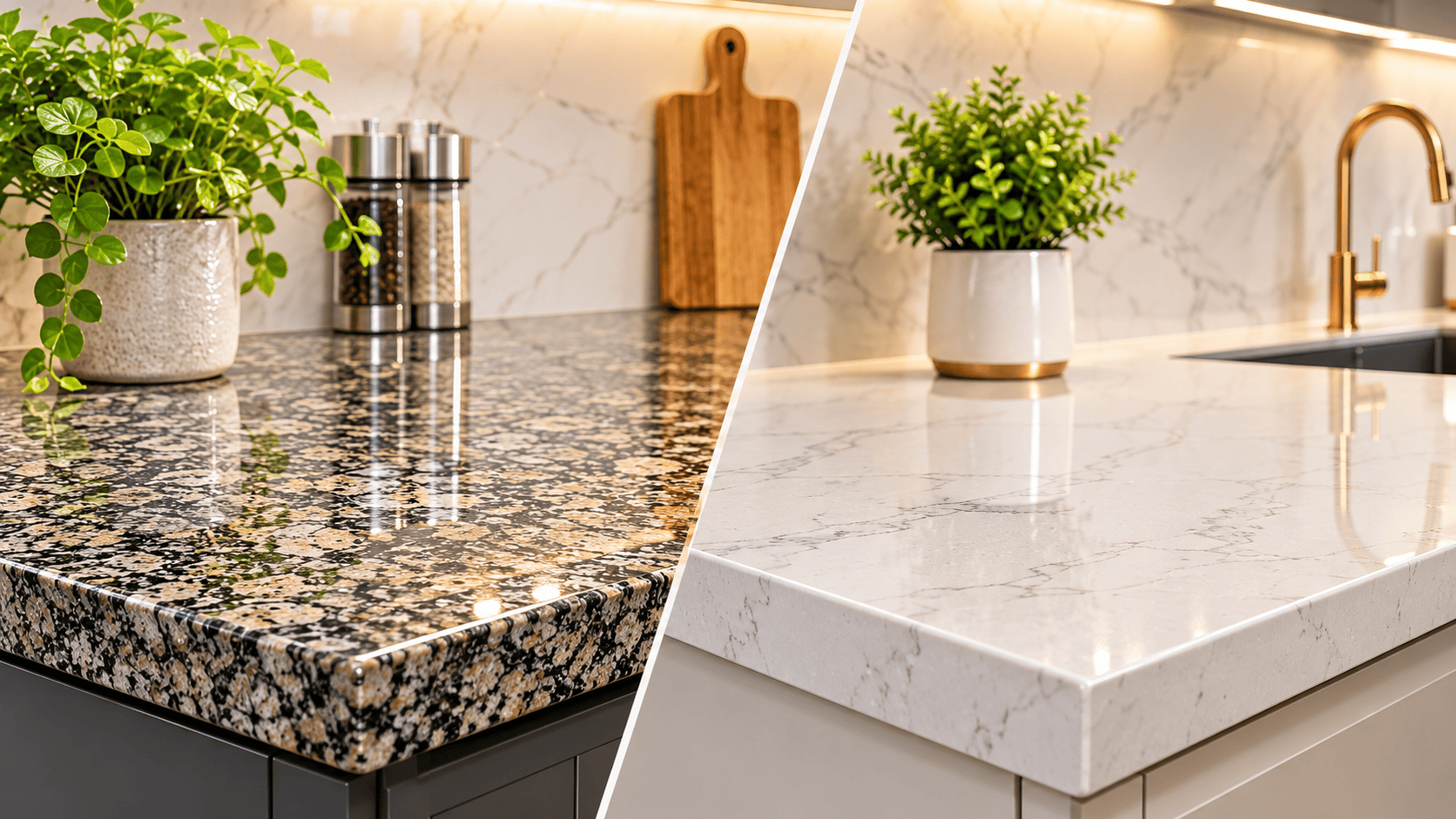
Granite vs Quartz Countertops: Which Countertop Material Wins?
Imagine this: you’ve made the exciting decision to renovate your kitchen, and you’ve already chosen the cabinets, flooring, and paint colors. But then you step into a showroom and encounter the dilemma that halts many projects: granite or quartz? Both options shine beautifully under the showroom lights, and both can come with a hefty price tag. Making the wrong choice could lead to a surface that stains, chips, or just doesn’t fit your cooking and lifestyle needs.
The positive aspect is that making this decision becomes simpler once you grasp how each type of stone performs in a typical home setting. Granite is a natural stone sourced directly from quarries, whereas quartz is a man-made surface composed of crushed stone and resin. These distinctions influence various factors, including maintenance, cost, and aesthetics. In this guide, we will compare both materials directly, explore their respective strengths and weaknesses, and provide practical advice to help you select the countertop material that aligns with your budget, lifestyle, and kitchen design confidently.
What Is Granite?
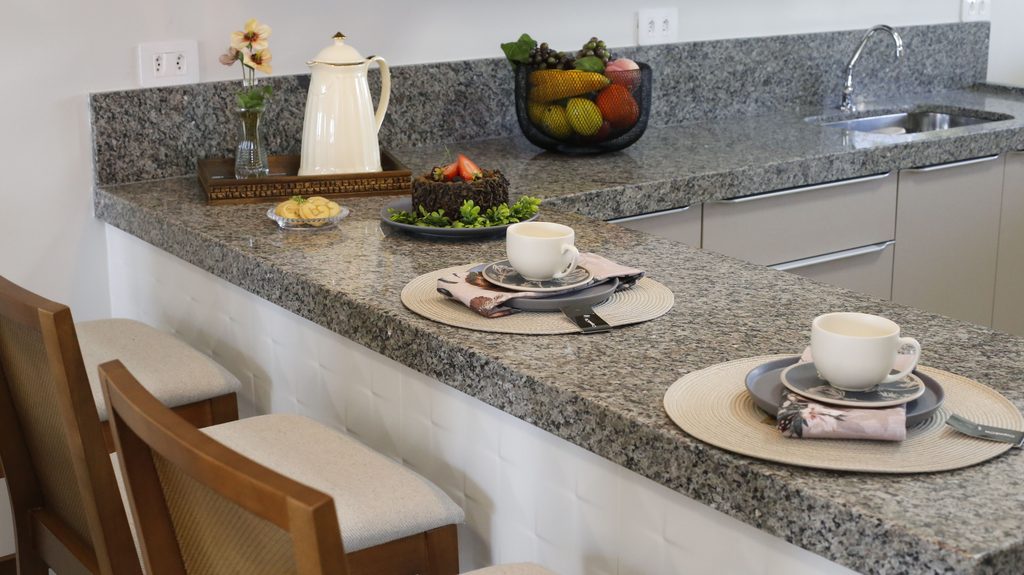
Granite is a natural stone that forms from igneous processes over millions of years. Each slab is one-of-a-kind, showcasing its own unique patterns of veining, flecks, and color variations. This distinctiveness is a major reason why people find it appealing.
Pros of Granite
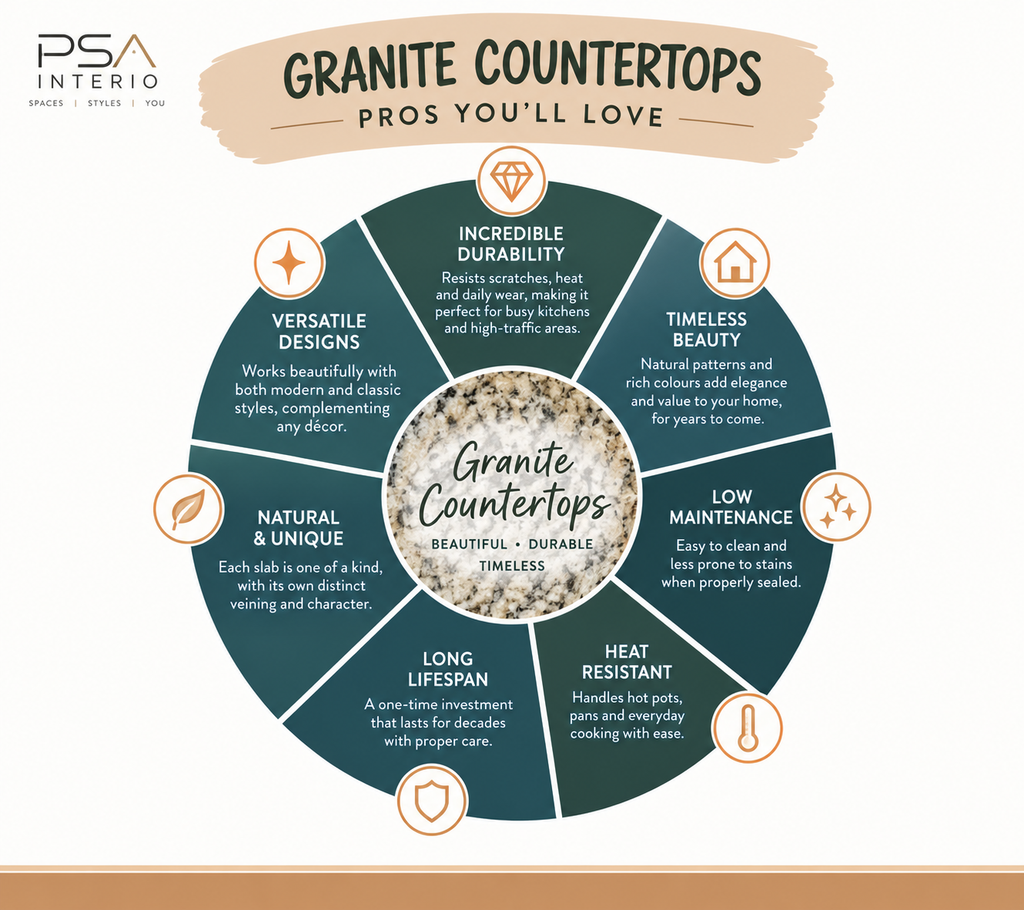
- One-of-a-kind natural beauty. No two slabs are alike, giving your kitchen a unique appearance that no one else will have.
- Excellent heat resistance. You can typically set a warm pan down for a moment without worry, but it’s still a good idea to use trivets.
- Extremely durable. Granite is tough and resists scratches from everyday knives and pots.
- High resale appeal. Many buyers view granite as a desirable and premium feature.
Cons of Granite
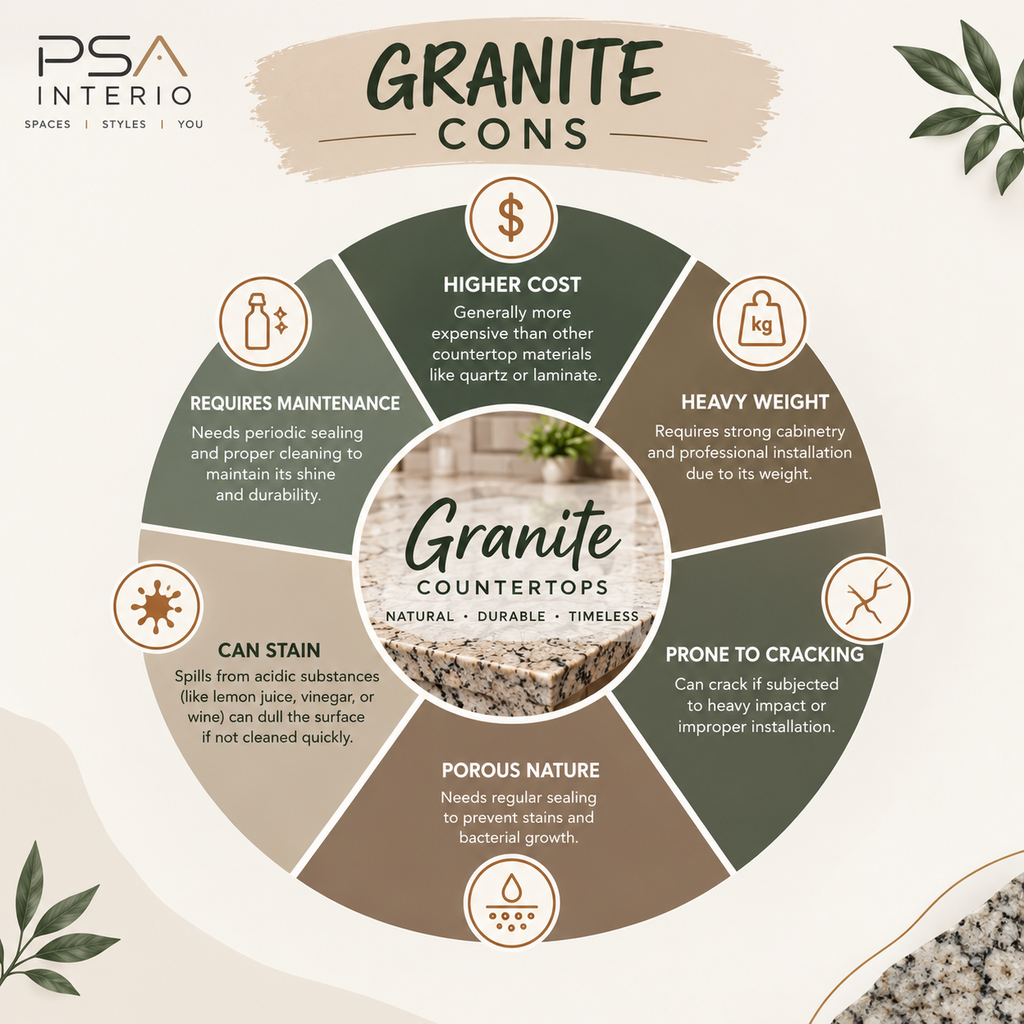
- Sealing is necessary. Since granite is porous, it usually requires sealing approximately once a year to prevent stains from substances like oil, wine, and coffee.
- Inconsistent appearance. If you’re aiming for a completely uniform look, the natural variations in granite can be quite frustrating.
- Prone to chipping or cracking. Sharp impacts near the edges or seams can lead to damage that may need professional repair.
What Is Quartz?
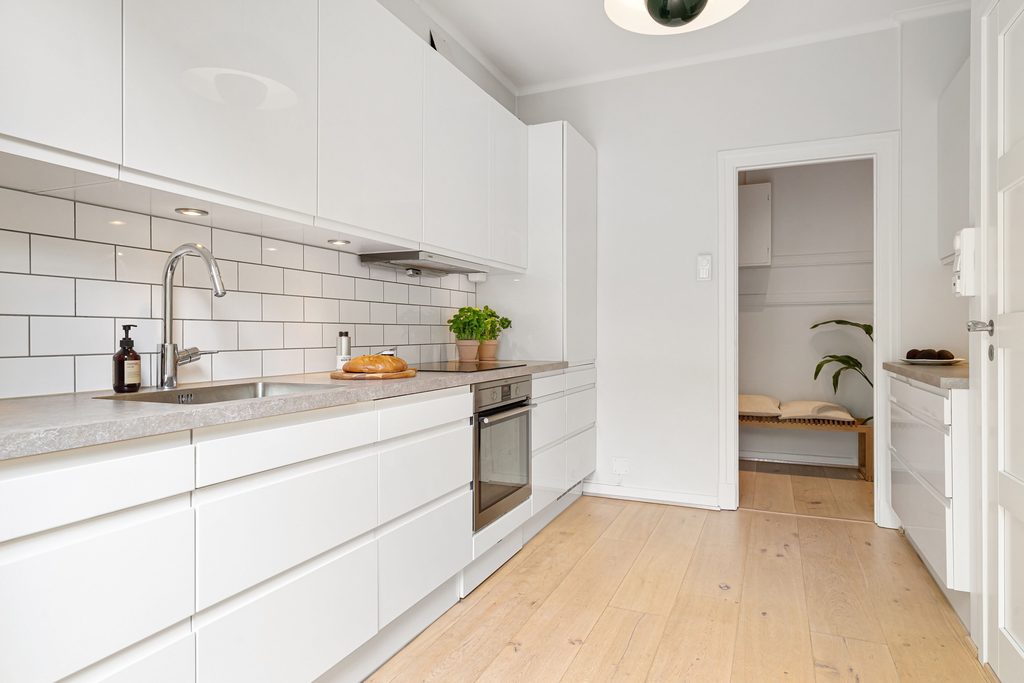
Quartz countertops are made up of about 90 percent crushed natural quartz combined with resins and pigments. This process allows homeowners to choose from a variety of colors and patterns, including styles that resemble marble.

Pros of Quartz
- Low upkeep required. Quartz is non-porous, which means it doesn’t need sealing and is resistant to most stains.
- Reliable appearance. The sample pattern closely matches what you’ll see on your countertop.
- Hygienic surface. Since liquids and bacteria don’t easily soak in, cleaning is usually as simple as using soap and water.
- Wide range of designs. From bright whites to bold dark hues, there are plenty of options to choose from.
Cons of Quartz
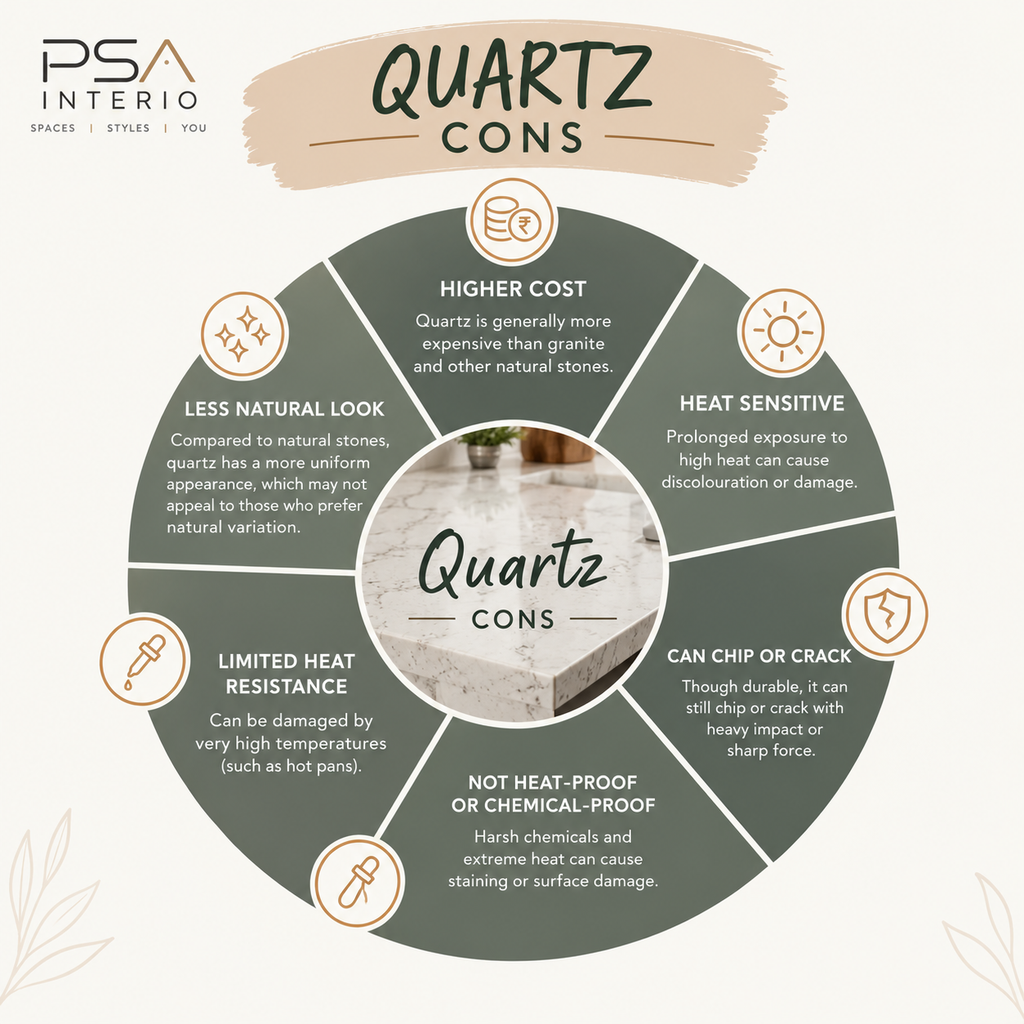
- Lower heat tolerance. The resin may discolor or warp when exposed to extremely high temperatures, so it’s best to avoid placing hot pots directly from the stove onto the counter.
- Can appear less natural. Some individuals feel that the patterns are somewhat uniform compared to genuine stone.
- Not suitable for outdoor use. Extended exposure to sunlight can lead to fading or yellowing.
Granite vs Quartz: A Side-by-Side Comparison
Here’s a comparison of how the two measure up on the key factors that homeowners often inquire about:
- Cost: Generally, both materials fall within the range of $50 to over $100 per square foot installed, influenced by factors like color, thickness, and location. Premium granite and designer quartz can both hit the higher price points, so it’s wise to compare actual quotes instead of assuming one is always less expensive.
- Maintenance: When it comes to convenience, quartz takes the lead. Granite requires periodic sealing to maintain its appearance.
- Durability: Both options are quite resilient. Granite is better at withstanding heat, while quartz tends to resist staining and chipping a bit more effectively in many situations.
- Appearance: Granite provides natural variation, while quartz offers a more uniform look and a wider array of color options.
- Lifespan: With the right care, both materials can last for several decades.
What to Consider When Choosing a Countertop Material
There is no single stone that can be considered the best; it’s really about what matches your home. To help you decide on the right countertop material, try asking yourself a few honest questions before you begin your shopping process.
- What’s your cooking style? If you often cook at high temperatures, granite is a great choice.
- How much maintenance are you prepared to handle? If sealing seems like too much work, quartz might be the better option.
- What aesthetic are you aiming for? If you appreciate distinctive natural patterns, go for granite. If you prefer a sleek, uniform look, quartz is the way to go.
- What’s your overall budget? Remember to include installation costs, edge profiles, and backsplash in addition to the slab price.
Which Countertop Material Fits Your Lifestyle?
Imagine a busy family with young kids who often deal with spills and have little time for upkeep. They would probably find quartz countertops appealing since they can easily wipe away stains from juice, sauce, or markers. Conversely, a passionate home cook who frequently sears steaks and bakes might lean towards granite due to its ability to withstand heat and its classic look. Viewing full slabs in person, especially in the lighting of your own kitchen, can significantly simplify the decision-making process, as small samples often fail to capture the complete pattern.
Simple Care Tips for Long-Lasting Countertops
- Promptly clean up any spills, especially acidic ones like lemon juice and wine, to keep your granite in good shape.
- For daily maintenance, use a gentle dish soap and a soft cloth, avoiding any harsh scrubbing materials.
- Always utilize trivets or hot pads for hot items, even if your stone can withstand heat.
- Follow your installer’s recommendation to reseal granite, which is usually done once a year.
- Protect your countertop and knives by using cutting boards.
Conclusion
Granite and quartz are both great, durable choices for countertops, but which one is right for you depends on your lifestyle. Granite provides natural beauty, strong heat resistance, and a unique appearance, but it does require occasional sealing. Quartz, on the other hand, is easy to maintain, has consistent patterns, and offers a wide range of design options, although it needs more care when exposed to high heat. By considering your cooking habits, maintenance preferences, style, and budget, you can usually find the best countertop material for your kitchen. Be sure to visit a local stone yard to compare full slabs and request detailed quotes before making your decision. If you need more help with your kitchen remodel, explore our other guides on cabinets, backsplashes, and layouts to create a cohesive design.