
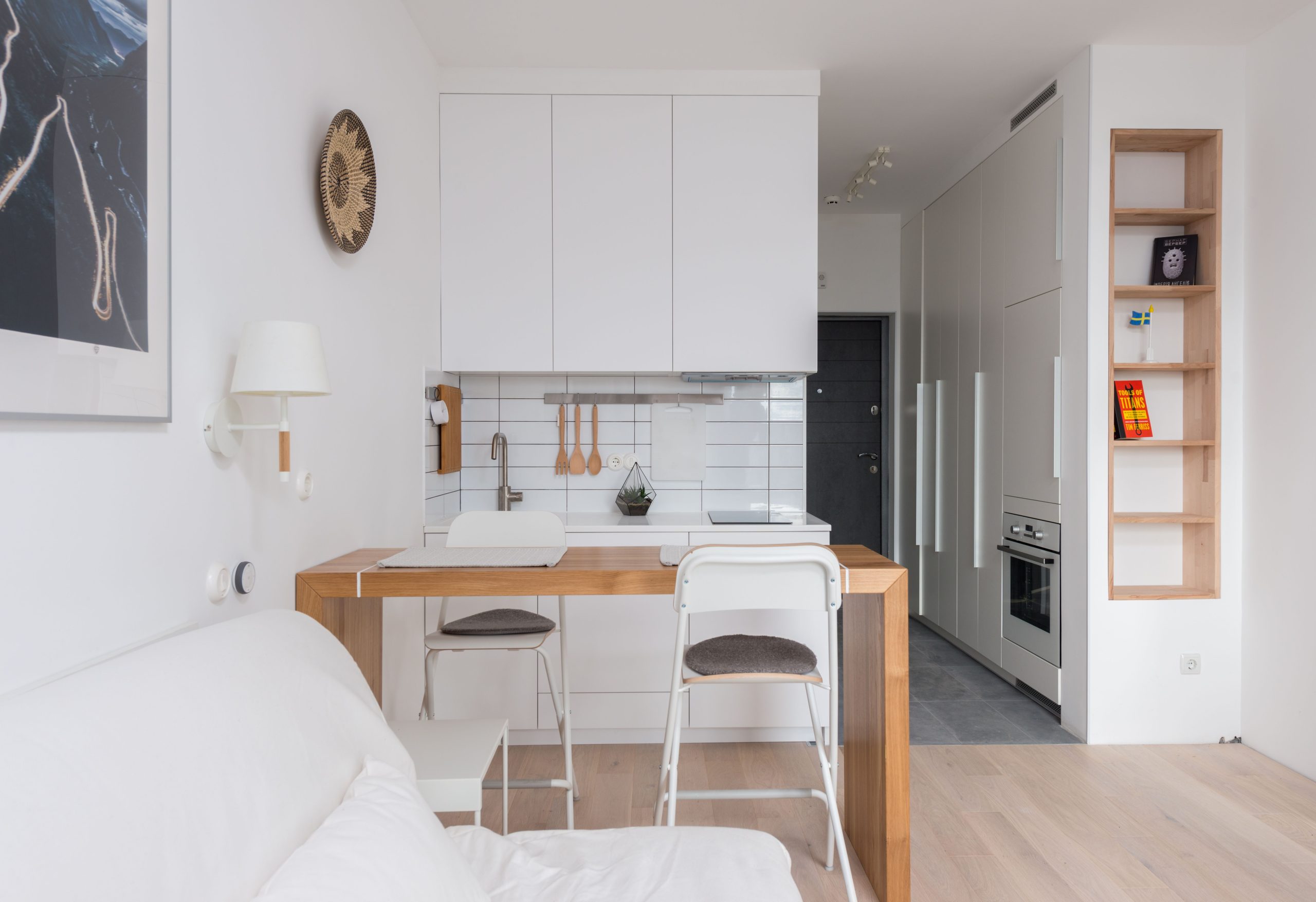
Living in a small apartment doesn’t have to mean sacrificing style. With the right interior design strategies, even a cozy studio or one-bedroom can feel spacious, organized, and full of character. The key isn’t to squeeze in less, it’s about designing more intelligently. So, here are fifteen useful tips to create illusion of more space.
These interior design ideas cover everything from color and lighting to furniture and layout.
1. Choose a Light, Cohesive Color Palette
Light colors reflect natural light, making a room feel brighter and more spacious. For example, choose soft whites, warm greige, or pale sage for your walls and ceiling. Then, add color with textiles, art, and accessories. Maintaining a cohesive palette of 2-3 main colors can help keep a small space from looking too busy.
2. Go Big on Mirrors
Similarly, mirrors are a quick and affordable way to enhance your space. A large leaning mirror or a mirrored accent wall can create an illusion of depth and help light from windows spread further into the room. For the best effect, place one directly across from your main window.
The next set of interior design ideas focuses on furniture that works harder for you.
3. Invest in Multifunctional Furniture
This category stands out as the most impactful in small-space design. For instance, a storage ottoman, a sofa bed, a dining table that can be folded against the wall, or a bed frame with drawers built in can all perform the roles of two or three separate items.
- Expandable nesting tables for accommodating guests
- Entryway benches that offer storage and seating
- Murphy beds that create more space in a room during the day
4. Float Your Furniture Off the Walls (Sometimes)
It might seem odd, but when you push all the furniture against the wall, it can make a room feel like a hollow box with furniture just stuck to the sides. Instead, if you pull a sofa a few inches away from the wall and place a narrow console behind it, it adds a sense of depth and layering to the space.
5. Use Vertical Space Aggressively
When you run out of floor space, the walls and ceiling become valuable areas to utilize. For example, tall bookshelves, wall-mounted cabinets, and hooks placed near the ceiling can attract attention and provide storage that far exceeds what you can achieve with furniture on the floor.
- Put up shelves above doorways and windows.
- Opt for tall, slim bookcases rather than wide, short ones.
- Install pot racks or pegboards in the kitchen.
These layout-focused interior design ideas help define zones without adding walls.
6. Pick a Statement Rug to Anchor Zones
In open-plan or studio apartments, a well-placed rug can visually separate a “living room” from a “bedroom” or “office” without adding a single wall. Choose a rug large enough that at least the front legs of your furniture sit on it this keeps zones feeling intentional rather than accidental.
7. Let Curtains Go Floor-to-Ceiling
Installing curtain rods near the ceiling instead of directly above the window frame creates an illusion of taller walls and larger windows. Also, opt for light, airy fabrics in shades that match your wall color for a cohesive appearance.
8. Declutter Ruthlessly, Then Style Intentionally
However, in compact areas, clutter tends to become apparent very fast. A simple guideline is that everything visible should either be useful or beautiful ideally, it should be both. Instead of displaying all your decor at once, consider rotating it with the seasons, and keep your countertops as clear as possible according to your daily routine.
These interior design ideas bring warmth and personality to a small space.
9. Use Glass and Acrylic Furniture
For example, materials that are see-through, like glass coffee tables and acrylic chairs, tend to blend into their surroundings, giving the impression that they take up less visual space. This is especially effective in smaller dining nooks and entryways, where maintaining a sense of openness is key without compromising on utility.
10. Maximize Under-Bed and Under-Stair Storage
Similarly, bed risers, rolling storage bins, and drawer systems integrated into a bed frame can help manage a significant amount of clutter. If your space includes stairs or lofted areas, adding built-in drawers or cubbies underneath can transform unused space into a closet’s worth of storage.
11. Zone an Open Floor Plan with Furniture, Not Walls
Rather than relying on physical walls, consider using a bookshelf, a console table, or even altering the flooring or lighting to define the boundaries between different areas. As a result, this approach maintains open sightlines, which is essential for creating a sense of spaciousness in smaller areas, while still allowing each section to have its own unique character.
12. Layer Your Lighting
Relying on a single overhead light can make a room appear flat and create strong shadows. To improve the ambiance, combine ambient lighting from the ceiling with task lighting from desk or reading lamps, and include accent lighting like LED strips or wall sconces. This blend adds warmth and helps the space feel more curated instead of cramped.
13. Scale Furniture to the Room
However, oversized couches and heavy wooden pieces can make small areas feel cramped. Choose furniture with open legs (which allow light to filter through), slimmer arms, and dimensions that suit your space. A loveseat or a smaller sofa is often a better fit than a full-sized three-seater.
This is one of the simplest interior design ideas for adding personality instantly.
14. Add Personality with a Gallery Wall
For instance, a thoughtfully arranged gallery wall featuring art, photographs, or mirrors can really catch the eye and infuse personality into a space, all while leaving the floor clear. It’s an excellent way to transform a small apartment into a place that feels uniquely yours, rather than just a rental.
15. Keep a Consistent Design Thread Throughout
Finally, in a tiny apartment, you can see nearly every room from any other room. Using the same materials, colors, or shapes such as brass hardware, a specific wood tone, or rounded edges throughout the space helps create a cohesive flow, making the entire apartment feel larger and more purposefully designed than the sum of its parts.